
Ceiling GIB stopping, skimming and repairs in Auckland
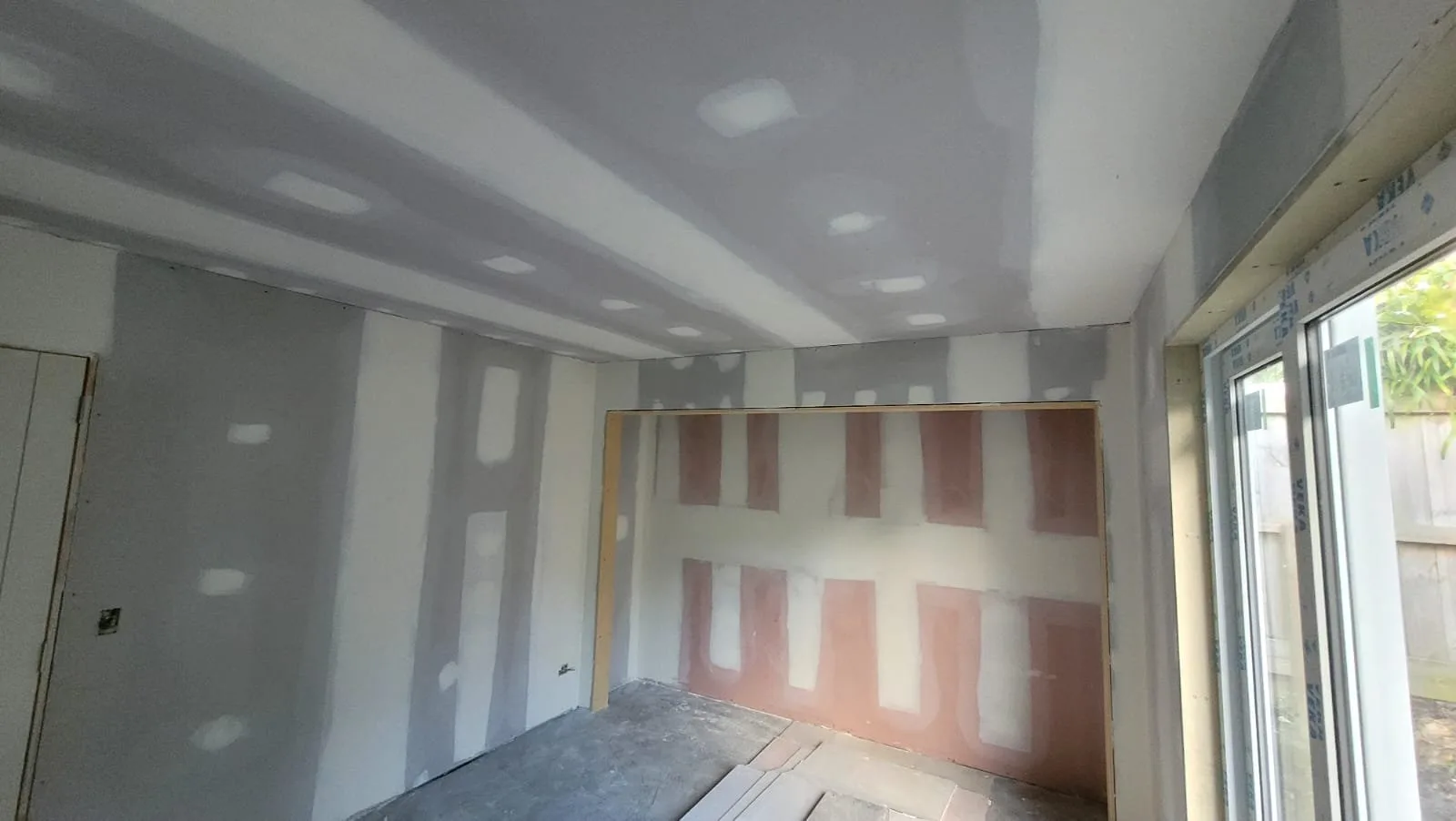
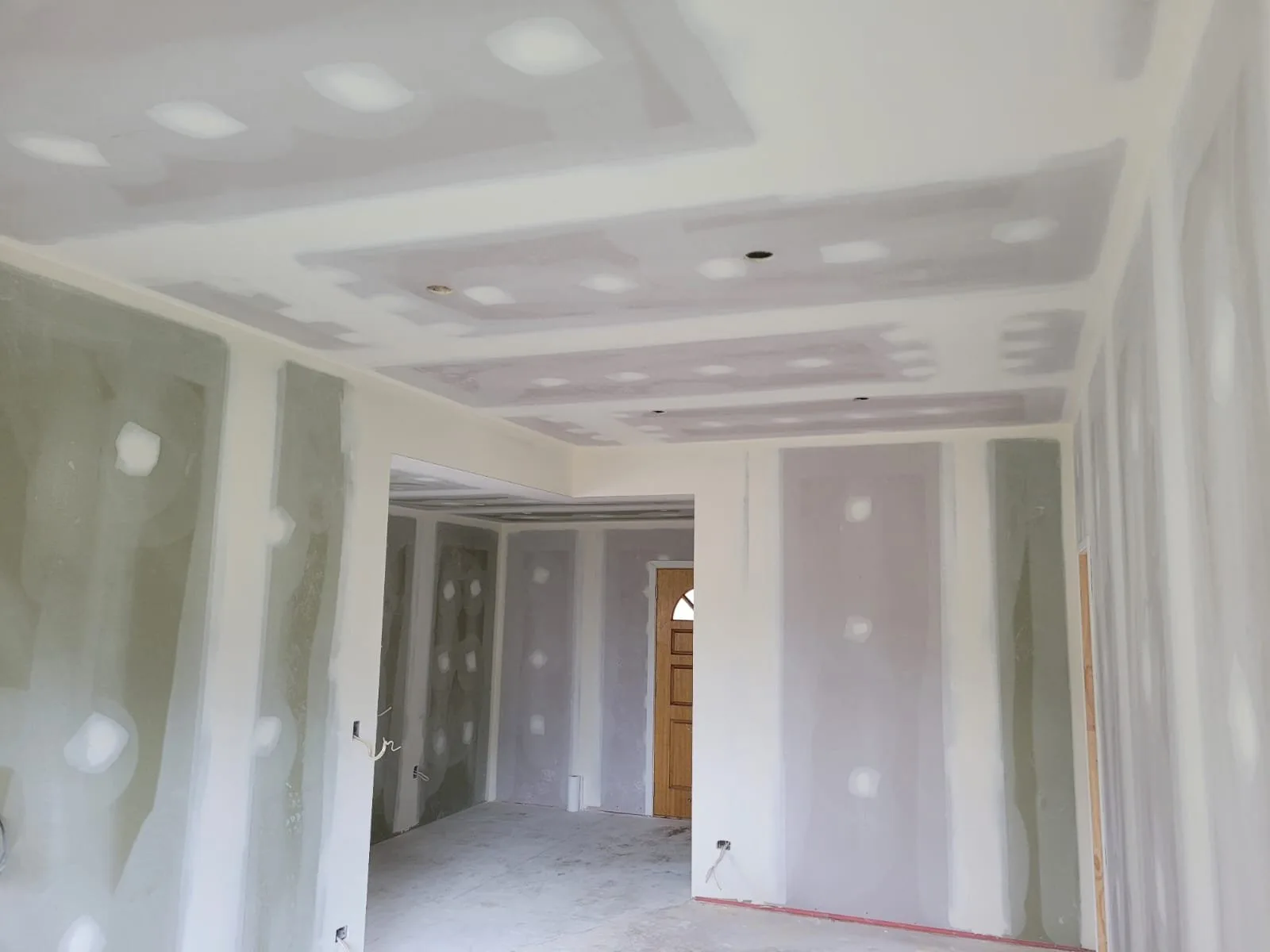
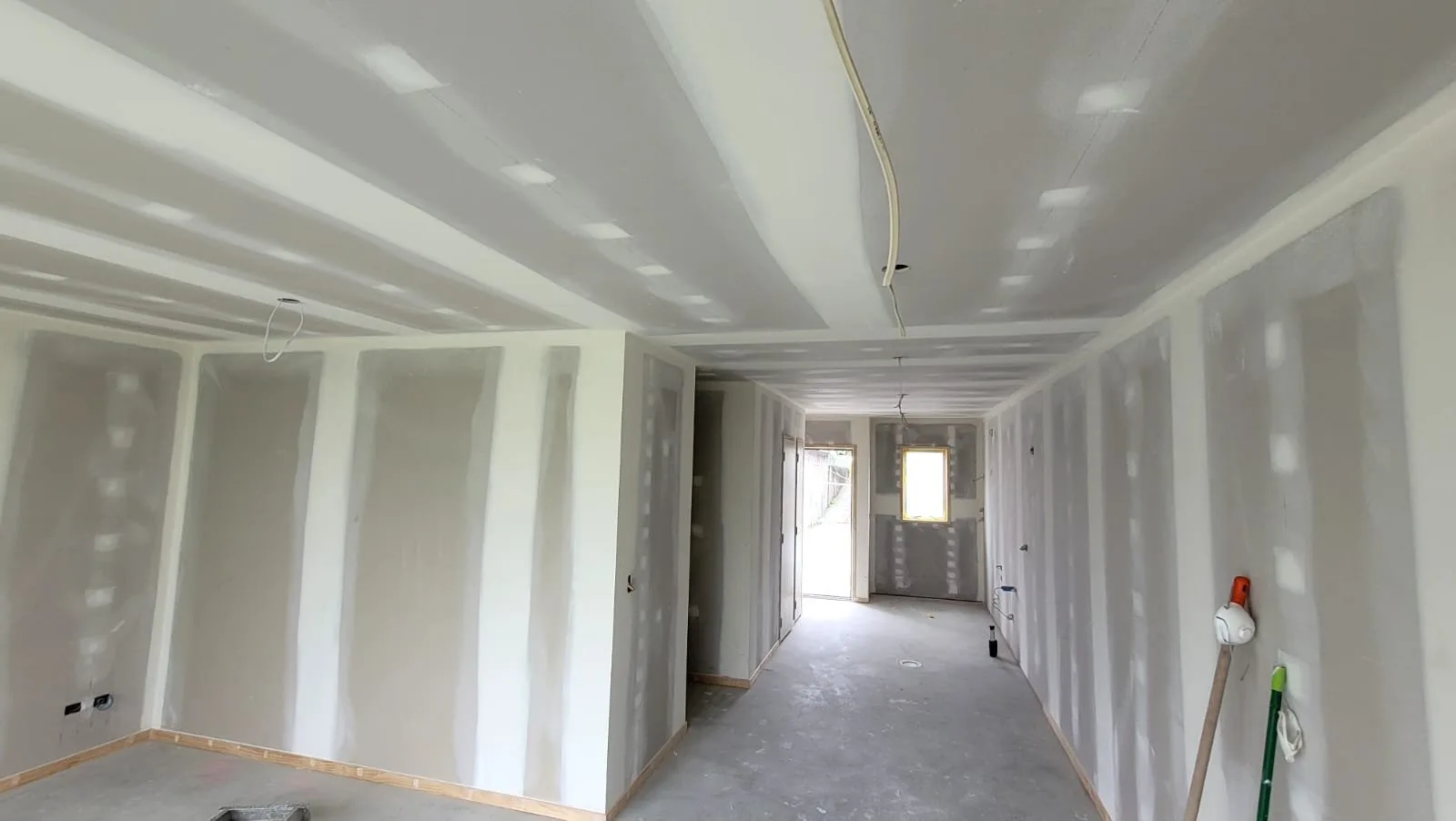
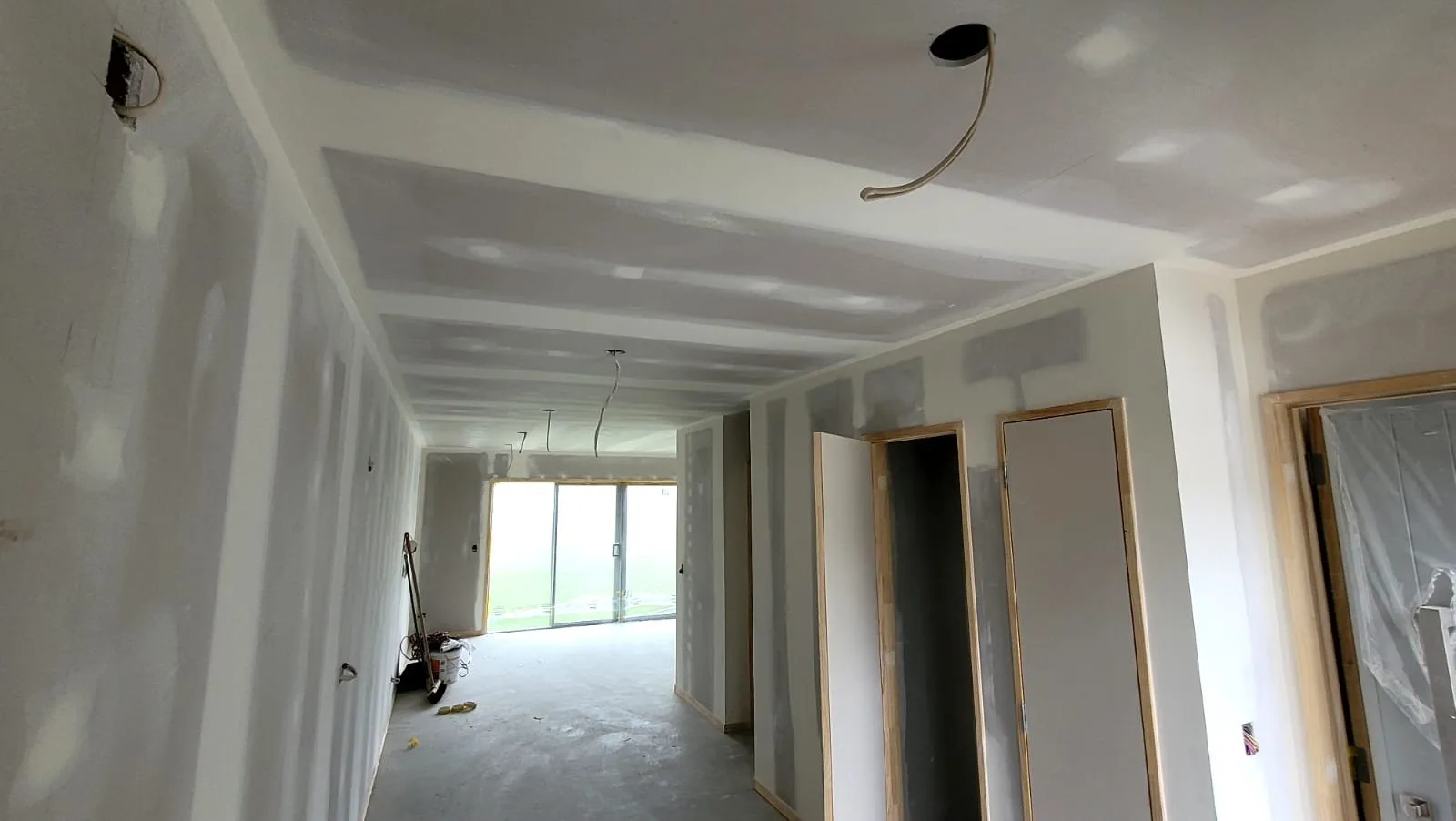
Ceiling GIB stopping in Auckland homes, from new ceilings in a renovation to skimming an old popcorn ceiling flat and repairing cracks and leak stains. A ceiling shows faults a wall would hide, so it gets more care.
5.018 Google reviewsWhy ceiling GIB stopping needs more care
Ceiling GIB stopping is the same trade as stopping a wall: tape the joints, build up the coats, sand flat. The difference is light. Daylight from a high window or a skylight, or a lamp near the ceiling, crosses a ceiling at a low angle, and that raking light throws a shadow off every ridge, joint and screw head.
A ceiling is also one large, unbroken surface with no furniture or pictures to hide behind, and the work is done overhead, which is slower and harder to keep flat. That is why we check every ceiling under a raking light before we call it ready for paint.
Level 4 or Level 5 for your ceiling
Level 4 is the standard for most Auckland homes. The joints, corners and screw holes are taped and stopped, and the ceiling looks flat under ordinary light with flat or low-sheen paint.
Level 5 adds a thin skim coat over the whole ceiling. It is worth it where low-angle light crosses the ceiling, from large windows, skylights or angled downlights, and where you plan a dark or gloss paint. When you compare quotes, check which level each one is priced at, how many coats are included and whether sealing is part of the price.
How we stop a ceiling
The steps are the same whether the ceiling is new board or a repaired one.
- Check the sheets are fixed flat and the screws set to depth, and refix any that are loose or proud
- Tape the joints and finish the edges square-stopped or coved, to suit the room
- Build each joint up over three coats, each wider than the last, letting each one dry
- Sand flat and check the whole ceiling under a raking light
- Seal, so the paint dries evenly over board and compound, then apply two top coats
Skimming popcorn and textured ceilings
Plenty of older Auckland homes still have textured ceilings, often called popcorn or stipple ceilings. They hold dust, they are hard to repaint and they date a room. Skimming gives you a flat, modern ceiling without relining the whole room.
Test it first. Textured ceilings in older homes can contain asbestos, so a sample should be tested before the ceiling is sanded, scraped or disturbed in any way. If the test finds asbestos, removing it is a job for an asbestos removal specialist, not a plasterer.
If the test is clear, there are two usual routes: take the texture off and skim the ceiling smooth, or line over it with new GIB and stop that. Which one suits depends on the condition of the ceiling underneath and on the cornices, and we will tell you which we would do when we quote.
Ceiling repairs
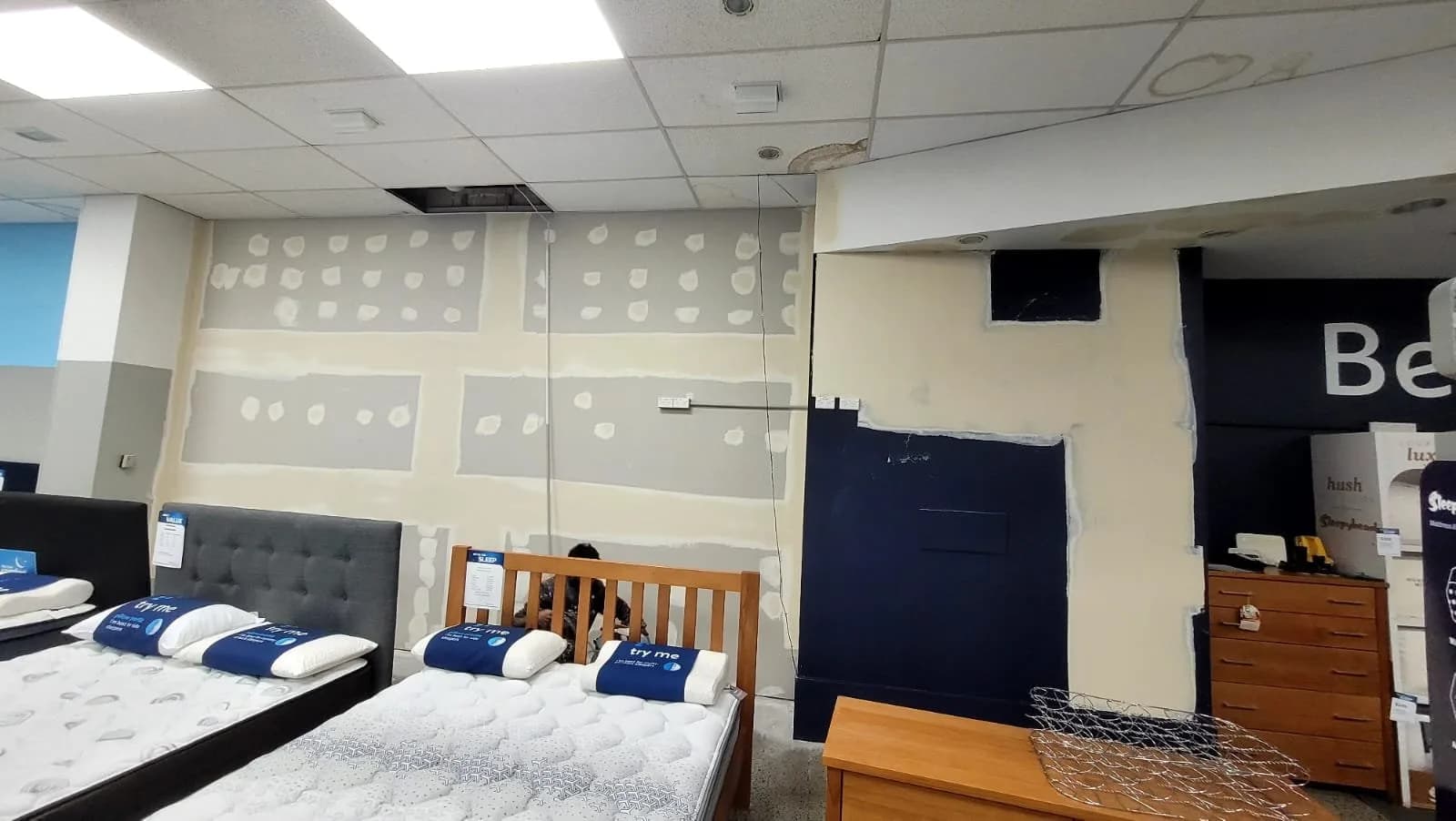
Common ceiling problems in Auckland homes are cracks along the board joints, screw pops, sagging sheets, stains from roof or bathroom leaks, and holes left by old light fittings or extractor fans.
Small damage is cut back, patched and stopped like a wall repair, then the whole ceiling is painted so the patch does not show. Where sheets sag, have gone soft from a leak or have been patched many times, replacing them is usually the better job. In a bathroom the new board should be wet-area board, and the room needs an extractor fan that works, or the staining will come back.
Karen Frost, Google review: “The repaired ceilings look like new and the walls in the bathroom kitchen and living room are finished to a high standard.”
What ceiling GIB stopping costs in Auckland
Ceilings are priced on area, height, condition and finish level. The ranges below are typical for Auckland and are a rough guide only, not IDW's price list. We price every ceiling in writing after seeing it, the price we quote is the price you pay, and the free quote includes a wall health check valued at $397.
Skimming a textured ceiling is priced after the test result and a look at the ceiling, because the condition underneath decides how much work it is.
| Work | Typical range |
|---|---|
| GIB stopping, labour per m², depending on finish level | $25 to $70 |
| Small crack repairs, priced per room | $200 to $600 |
| Ceilings above 2.4 m stud height, such as villas and stairwells | Add 15% to 25% |
How long ceiling stopping takes
Drying sets the pace, not the hands-on work. Each coat has to dry before the next, and in Auckland's humid winter weather that means allowing 24 to 36 hours between coats. A three-coat Level 4 finish can take four to seven days including sanding. A Level 5 skim, or skimming a textured ceiling, adds coats and drying time on top.
Keeping the room aired while the work is going on helps the compound dry evenly.
Updated October 2026
Our work
Questions people ask
How much does ceiling GIB stopping cost in Auckland?
Typical Auckland labour rates run from $25 to $70 per m², depending on the finish level, with 15% to 25% added for ceilings above 2.4 m. IDW prices each ceiling in writing after seeing it.
Is it worth skimming a popcorn ceiling?
Usually, if the ceiling underneath is sound, because it gives you a flat ceiling without relining the room. Have the texture tested for asbestos first. If the ceiling sags or is badly damaged, lining over it or replacing it can be the better job.
Does my ceiling need a Level 5 finish?
Only if low-angle light crosses it, from large windows, skylights or angled downlights, or if you plan a dark or gloss paint. Level 4 is right for most Auckland ceilings.
Can a cracked ceiling be repaired, or does it need replacing?
Most cracks can be repaired. The joint is opened up, re-taped and stopped, then the ceiling is painted. Sagging, soft or heavily patched sheets are usually better replaced, and we do that too.
When can a stopped ceiling be painted?
Once the last coat is dry, sanded and sealed. Because the same crew stops and paints, there is no wait for a second trade to fit you in.
Related services
GIB lining
Plasterboard fixed straight and screwed to depth, so the stopping and paint that follow have a flat surface to sit on.
GIB stopping
Joints taped, coated and sanded to the level of finish your paint and lighting need.
Plastering
Interior skim coats and plaster repairs that leave old and new surfaces reading as one wall.
Interior painting
Walls, ceilings, doors and trim, prepared properly and painted with a tidy site at the end of each day.
Get a free quote
Tell us about the job and we will call you back to arrange a time to come and see it. Every quote starts with a free wall health check, valued at $397: we look over the job, tell you what actually needs doing, and put the price in writing. The price we quote is the price you pay.