
GIB repairs in Auckland: holes, cracks and water damage
GIB repairs for Auckland homes, from a door handle through the wall to a ceiling stained by a leak. We look for the cause, repair the board, then stop and paint it so the repair disappears into the wall.
5.018 Google reviewsWhat GIB repairs cover
GIB repairs put damaged plasterboard back to a flat, paint-ready surface that you cannot pick out once it is painted. All of it is interior work, on walls and ceilings. Most of the GIB repairs Auckland homes need fall into a few groups:
- Holes from door handles, knocks and fixtures that have been taken down
- Cracks along board joints and running out from the corners of doors and windows
- Screw pops and joints that have lifted
- Dents and gouges from moving furniture
- Stained, bubbling or soft board after a leak
- Holes left after electrical or plumbing work
- Old patches that still show through the paint
Holes in GIB walls
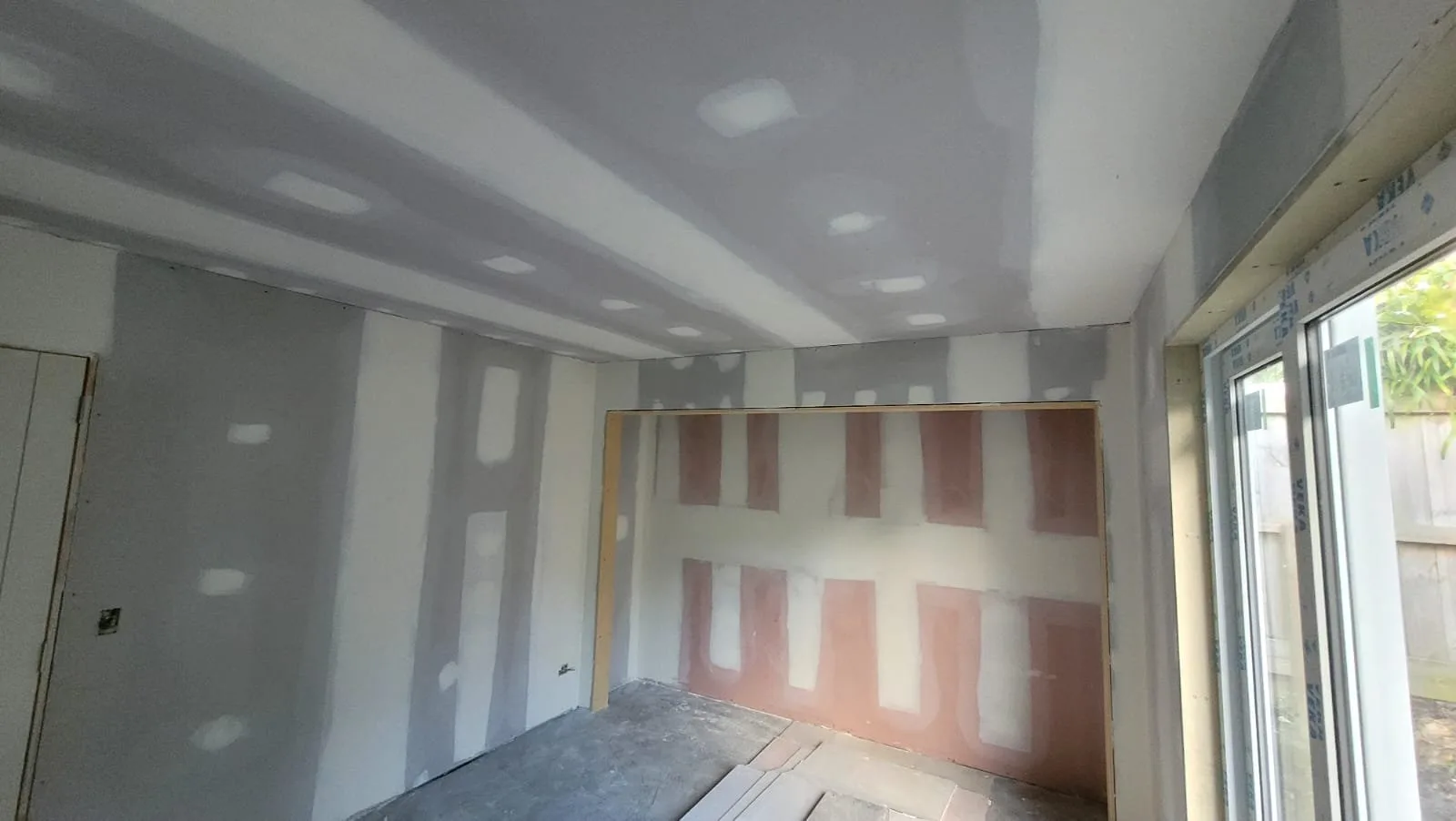
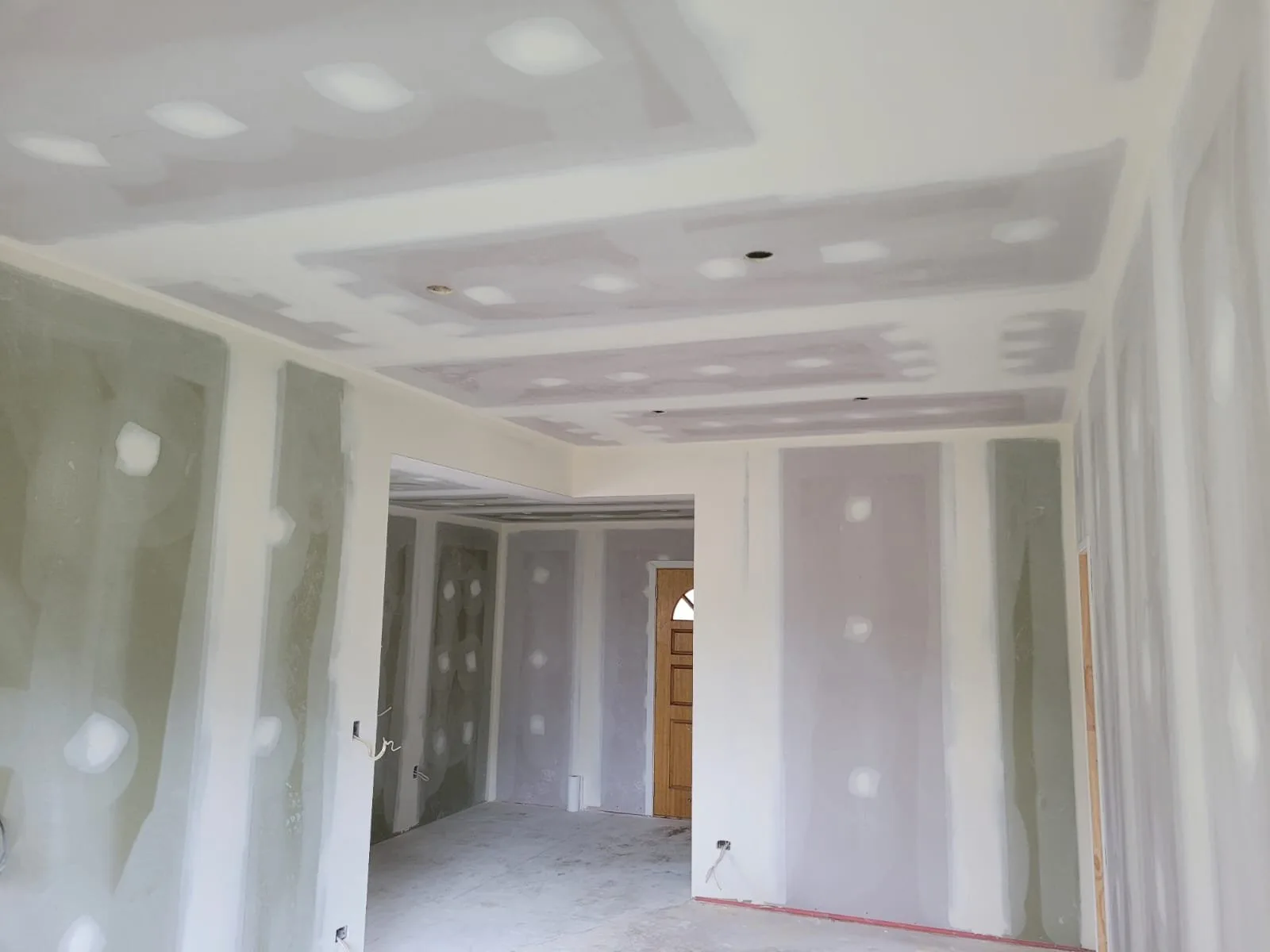
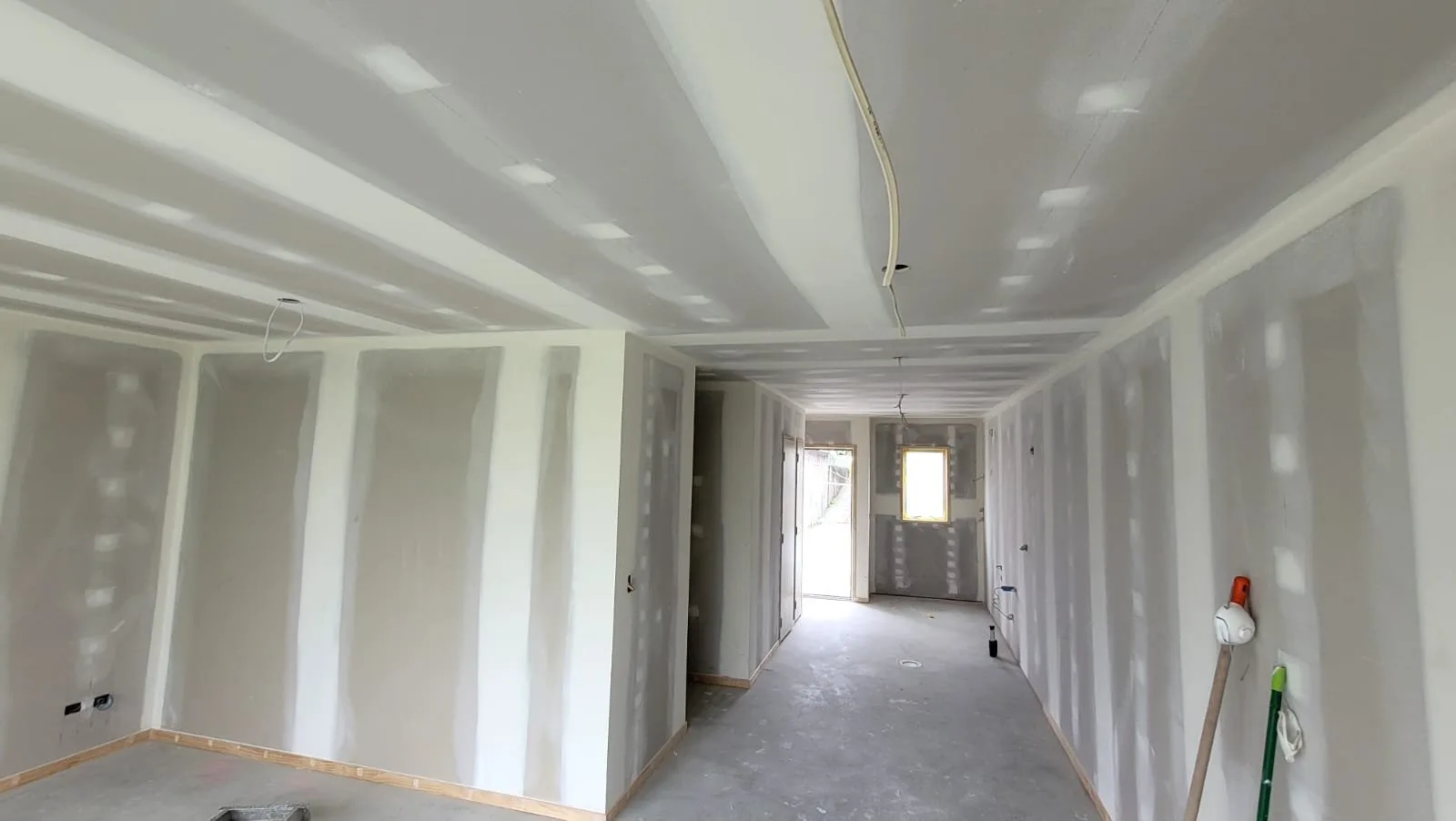
Small holes and dents are filled in thin coats, each one left to dry, then sanded and feathered out well past the edge of the damage. A patch that is built up too thick, or not spread wide enough, leaves a bump, and low light from a window will find it.
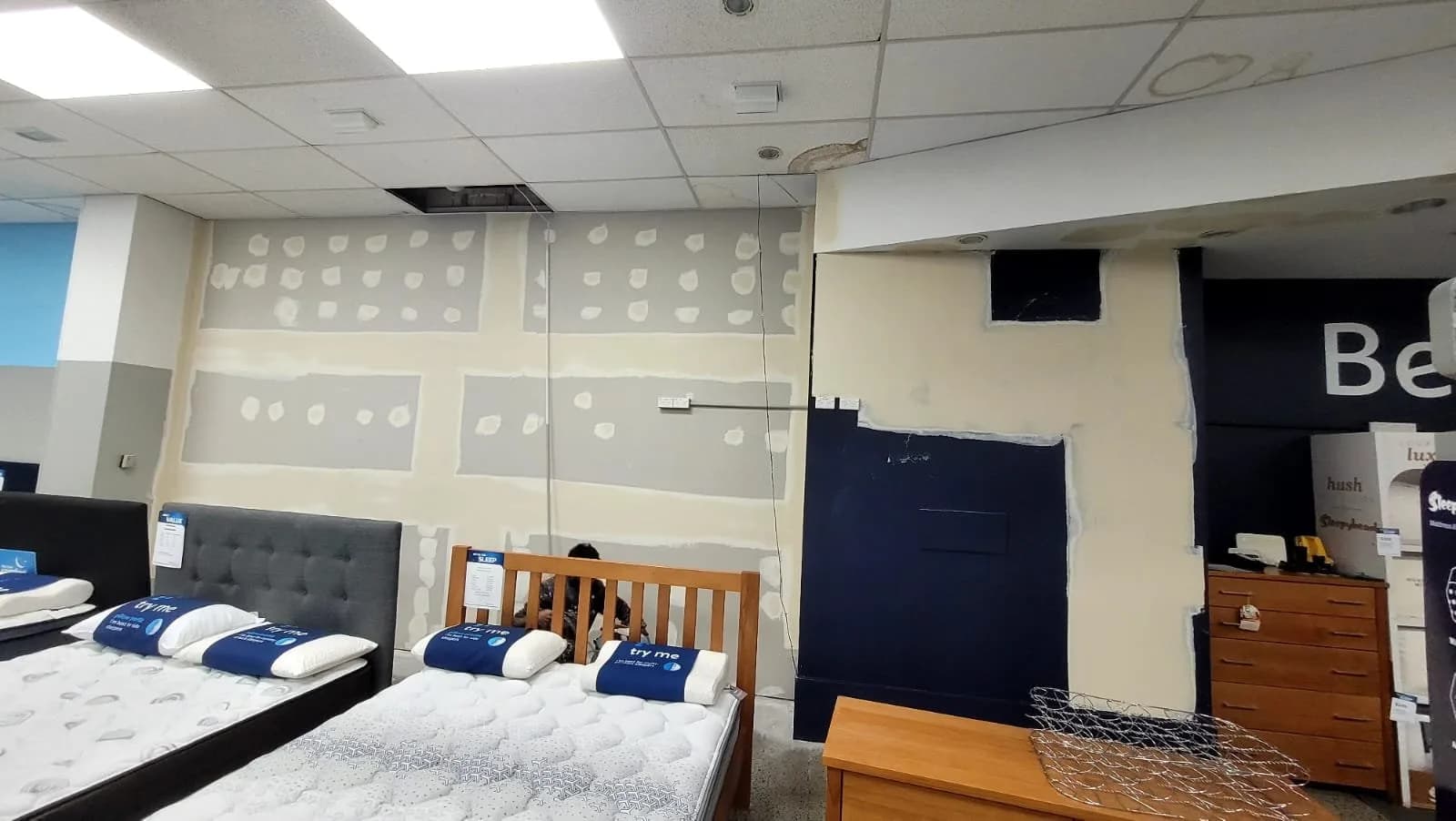
Larger holes need more than filler. We cut the damaged board back to a clean opening, fix backing behind it, screw in a new piece of GIB and stop its edges like any other joint. Where a whole sheet is broken or has been patched several times, replacing the sheet is usually quicker and gives a better result.
Cracks, and why some come back
Most Auckland houses are timber-framed, and timber moves with the seasons. That movement shows up as cracks along board joints and out from the corners of door and window openings. Filling a crack with compound on its own rarely lasts, because the next bit of movement opens it again.
A lasting crack repair opens the crack up, re-tapes the joint and builds the coats back up, so the tape takes the strain rather than the paint. If the cause is still active, such as a slamming door, a leak or framing that is still moving, the crack can return however well it is stopped. We look for the cause when we quote, and tell you if another trade needs to deal with it first.
Water-damaged GIB
Leaking roofs, showers and pipes, and condensation, all end up in the plasterboard. The signs are brown staining, bubbling or peeling paint, board that feels soft or sags, and mould along the ceiling line.
The leak has to be fixed first, by a roofer or plumber, and the framing left to dry. Stopping over damp board leads to bubbling and cracking, so the area needs to be dry before the repair starts.
Board that has gone soft, swollen or mouldy usually has to be cut out and replaced, because it cannot be patched back to strength. A stain on board that is still dry and firm can often be sealed and painted instead. Because we line, stop and paint, replacing a section of wall or ceiling is one job for one crew.
How we repair GIB
Every repair, large or small, goes through the same steps.
- Look at the damage and its cause during the free quote, and put the price in writing
- Protect floors and furniture before any cutting or sanding
- Cut out damaged board, and fix backing or replace sheets where needed
- Tape and stop in coats, letting each coat dry before the next
- Sand flat, feather wide, and check the repair under a raking light
- Seal and paint, usually the whole wall or ceiling, so the repair does not show as a patch of different sheen
What GIB repairs cost in Auckland
There is no fixed price for a GIB repair, because one dented wall and a leak-damaged ceiling are very different jobs. The ranges below are typical for Auckland and are a rough guide only. They are not IDW's price list: we price every job in writing after seeing it, and the price we quote is the price you pay.
What moves the price is how many repairs there are, whether board needs replacing, ceilings versus walls, the finish level, access, and whether painting is included. The free quote includes a wall health check valued at $397, so you know what actually needs doing before you commit.
| Work | Typical range |
|---|---|
| Small patch repair, such as a hole or dent | $100 to $300 |
| Small crack repairs, priced per room | $200 to $600 |
| Re-stopping larger areas, labour per m² | $25 to $70 |
| Ceiling work above 2.4 m stud height | Add 15% to 25% |
How long GIB repairs take
The hands-on work for a small patch is often a couple of hours. Drying is what takes the time. Each coat has to dry before the next goes on, and in Auckland's humid winter weather that can mean 24 to 36 hours between coats. So even a small repair usually means coming back, and larger repairs or several rooms can take up to a week, including drying time.
Susan W, Google review: “Exemplary work between a team arriving as agreed, and courteously tidying up and returning on time once dry after the weekend to sand finish.”
Updated October 2026
Our work
Questions people ask
How much do GIB repairs cost in Auckland?
Typical Auckland ranges are $100 to $300 for a small patch and $200 to $600 a room for small crack repairs. IDW prices each job in writing after seeing it, and the free quote includes a wall health check valued at $397.
Can you fix a large hole in a GIB wall?
Yes. The damaged board is cut back to a clean opening, backing is fixed behind it and a new piece of GIB is screwed in. The joints are then taped, stopped, sanded and painted so the patch does not show.
Will the crack come back after it is repaired?
A crack caused by normal seasonal movement, and repaired with tape rather than filler alone, should stay closed. If the cause is still active, such as a leak or framing that keeps moving, it can return, which is why we look for the cause before we quote.
Does water-damaged GIB have to be replaced?
If the board has gone soft, swollen or mouldy, yes. It is cut out and replaced once the leak is fixed and the framing is dry. A stain on board that is still dry and firm can usually be sealed and painted.
Will I be able to see where the repair was?
You should not. We feather each repair wide, check it under a raking light, and usually paint the whole wall or ceiling, because a touched-up patch tends to show as a different sheen.
Do you repair ceilings as well as walls?
Yes. Cracks, leak stains, sagging sheets and holes left by old light fittings are all common. We plaster interiors only, and where a ceiling is too far gone to patch, we replace it.
Related services
GIB lining
Plasterboard fixed straight and screwed to depth, so the stopping and paint that follow have a flat surface to sit on.
GIB stopping
Joints taped, coated and sanded to the level of finish your paint and lighting need.
Plastering
Interior skim coats and plaster repairs that leave old and new surfaces reading as one wall.
Interior painting
Walls, ceilings, doors and trim, prepared properly and painted with a tidy site at the end of each day.
Get a free quote
Tell us about the job and we will call you back to arrange a time to come and see it. Every quote starts with a free wall health check, valued at $397: we look over the job, tell you what actually needs doing, and put the price in writing. The price we quote is the price you pay.